Defend Nova Scotia Books: How the Government is Erasing You For Profit
First, they wanted to erase arts programs from universities. Now they want to erase artists from your communities.
Preface
I have just learned that the arts are being heavily defunded in Nova Scotia. There are also some heavy cuts in education. You may have seen posts about this on social media: libraries and publishers are asking the community to email government officials because their funding has been cut short. Instead of trying to paraphrase what’s going on, I’m just going to leave the facts and their sources here, starting with cuts to the Annapolis Valley Regional Library:
Annapolis Valley Regional Library (AVRL) stated that they have “received confirmation that there has been no increase to sustainable library funding for 2026-27. Funding has been maintained at the 2020-2025 levels.” (AVRL).
Then there are the devastating budget cuts to local publishers in Nova Scotia, such as Nimbus Publishing:
Yesterday, the Provincial PC Government announced devastating cuts to the Arts for its 2026/2027 budget, including ending the Publisher Assistance Program. This program is a necessary core investment from the province, something every province in Canada provides to its book publishing sector in order to help protect our culture from the huge onslaught of books coming in from across our borders. We need your help. (Nimbus Publishing).
From the Halifax Examiner:
“Premier Tim Houston’s government has released a 13-page list of cuts to government programs and grants to dozens of community groups and arts organizations. The cuts represent a $304 million saving on a provincial budget of more than $17 billion. They range in size from 10% to 100%, with funding to most arts and creative industries down by at least 30%. Education funding also took a major hit. There is a one-time loss of $11 million to Saint Mary’s University, which represents 28% of its operating grant from the province. In addition, the government is discontinuing funding to PhD programs in education at Acadia University, Mount Saint Vincent University, and St. Francis Xavier University.
More than $600,000 will be cut from curriculum development, and a $600,000 continuing education program for early childhood educators is gone. (Halifax Examiner).
Basically, tens of millions of dollars are being held back, including funds for universities, scholarships, arts programs, and supports for early childhood education. The cost-saving measures by the province are a response to its $1.2 billion deficit.
Why You Should Care
The Department of Education and Early Childhood Development’s latest statistics show about one in three children in grades 3 and 6 are reading below their grade level in Nova Scotia.
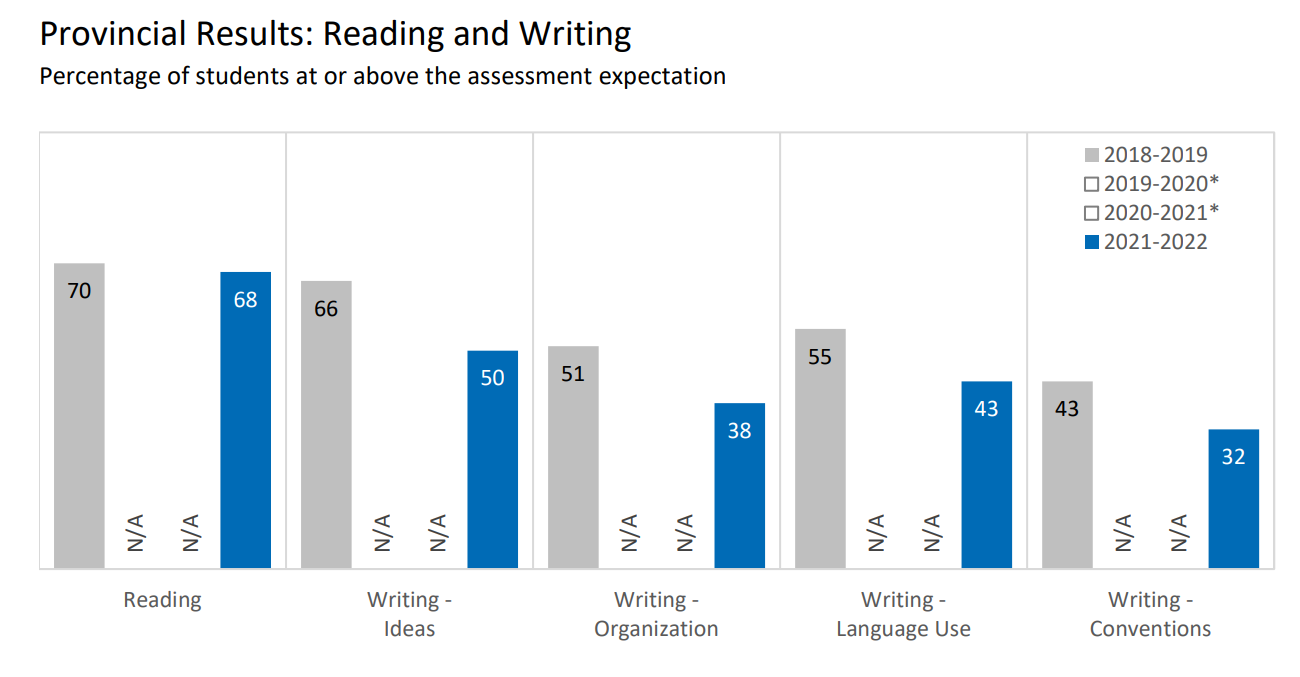
This is alarming, and defunding libraries and publishers isn’t going to help. When marginalized communities see themselves in literature, it fosters prosperity for that community. When children see themselves in literature, it fosters prosperity in that child. Imagine that you are a ten-year-old Indigenous girl. You are one of those children who read below their grade level. All of the stories you read are from mass-marketing publishers distributing books they know will sell globally. These books often contain surface-level or incorrect stereotypes about Indigenous people - stories like Indiana Jones, which fall into many harmful tropes such as the “savage Indian.” This isn’t to say that stories like Indiana Jones shouldn’t exist, but imagine if these are the only kinds of books that Indigenous children have access to, instead of books like “I Lost My Talk” by Rita Joe, a revered Mi’kmaq elder who wrote about some of her experiences at Shubenacadie Indian Residential School. (This important children’s picture book was published by Nimbus - one of the local publishers that is being defunded.)
If you are a charity looking to fund a scholarship for a student attending university in Nova Scotia, which author would more influence your decision to make that scholarship out to Indigenous women - the author of Indiana Jones or the author of I Lost My Talk? Worse: Imagine that there are no books about Indigenous peoples at all, because the government has made it impossible for publishers to invest in local authors, since there is no pre-existing international or even national market for them. What is that little girl supposed to read? If she can’t see herself in literature, why should she read? What does that mean for her future? Here’s a real world example of the connection between marginalized communities, poverty, and illiteracy in the US.
That’s why it’s important to fund local authors and publishers. Without locally written books, what these strangers write about you defines your reality, or worse - you have no proof of your reality in literature. We need stories from local authors, because if we only publish what we know will sell, then we will never progress as a society. We will never be open to new, innovative ideas. We will never empathize with each other, and we will never change. (Kate Beaton, a local of Cape Breton and author of the internationally bestselling “Ducks,” has a wonderful lecture on this topic called Bodies of Art, Bodies of Labour.)
If anything, we should be putting more money into local artists in order to boost the economy. Check out this incredibly successful program in Ireland that implemented basic income for artists and received a major return on investment.
By defunding local publishers, we limit that publisher’s ability to put money into making books by local authors, who typically don’t have a big name or audience. The publishers are forced to instead publish mass-market titles they know will sell. We lose local-interest books such as:
Books about historic events like the Halifax Explosion, the Acadian Expulsion, and Africville.
Books about residential schools, ghost towns, and pandemics.
Books about your family, your children, and your history.
Books about you.
This should be concerning. This should scare you. You should feel motivated to do something about it. Don’t let the government dictate your identity. Do not allow the government to erase you for profit. And definitely don’t allow the government to ruin your children’s future.
What You can do!
Nimbus Publishing and the Annapolis Regional Library are asking people to email their local MLA and the Premier. I have copied and pasted Nimbus’s request here as an easy template you can use.
Send an email to your MLA (contact list attached)
Suggested wording (copy and paste this, or write your own):
I am writing in support of the NS Publishers whose investment fund has been cut in the upcoming budget.
I recognize the need for responsible fiscal management in the province, but I also would like to note the economic and cultural benefits which a growing book publishing industry can generate with its small annual investment. The unique strength of book publishing is its continuing success at achieving substantial revenues from domestic and export sales, its stability over the long term as cultural organizations and employers, and the appeal of the books from NS creators across our borders and here at home.
Every other province in Canada invests in its stories through assistance to its publishers. Government investment is the only way publishers in Canada are able to be sustainable.
I stand with NS publishers in asking you to DEFEND, not DEFUND, NS books.
Are you an author? Mail your book to the premier.
Who better than you to share a your book with the Premier? Along with a book, include a personal note to him describing what trying to build a living as a professional writer looks like in Canada. How do you make ends meet? What sacrifices do you have to make? How has the loss of royalties from the education sector affected you?
Before you mail out your book, please take a picture and post it to your social media platforms, with an explanation of why you are sending your book to the Premier—for example, “I mailed my latest book to Premier to remind him what supporting Nova Scotian creators really means.”
Here is how to make your message heard
Tag Premier Houston (see https://linktr.ee/TimHoustonNS), and Minister Dave Ritcey (@RitceyDave)
Use the hashtags #DefendNSBooks
Tag your publisher and @AtlanticBooksToday
Please email admin@atlanticpublishers.ca to let Nimbus know you have mailed a book to the Premier.
The mailing address is:
Office of the Premier
7th Floor, One Government Place
1700 Granville Street
Halifax, NS
B3J 1X5
P.O. Box 726
Halifax, NS
B3J 2T3
Phone: 902-424-6600
E-mail: premier@novascotia.ca
Encourage others to get involved:
Help build the momentum by encouraging others in your network to take part.
Amplify what others are doing
Share posts related to the campaign. Just search for #DefendNSBooks on Instagram and/or Facebook and then RT, share, like and comment away!
Come out and support
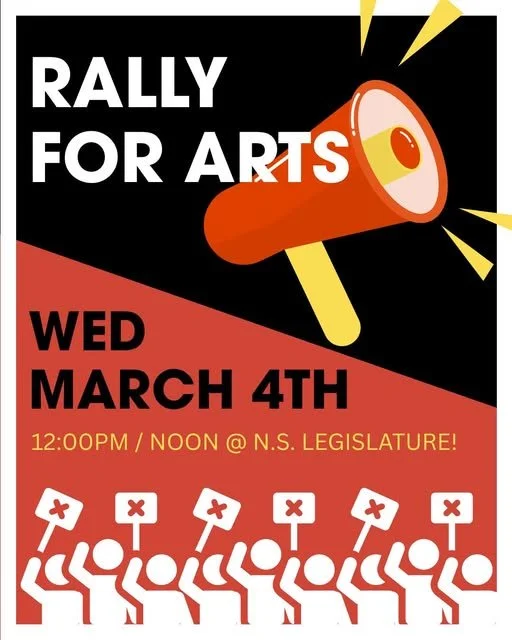
There's an Arts funding rally happening on March 4th at noon at the NS Legislature. Bring your sign with the message DEFEND not DEFUND NS Books!